Youth's Lives Every Day
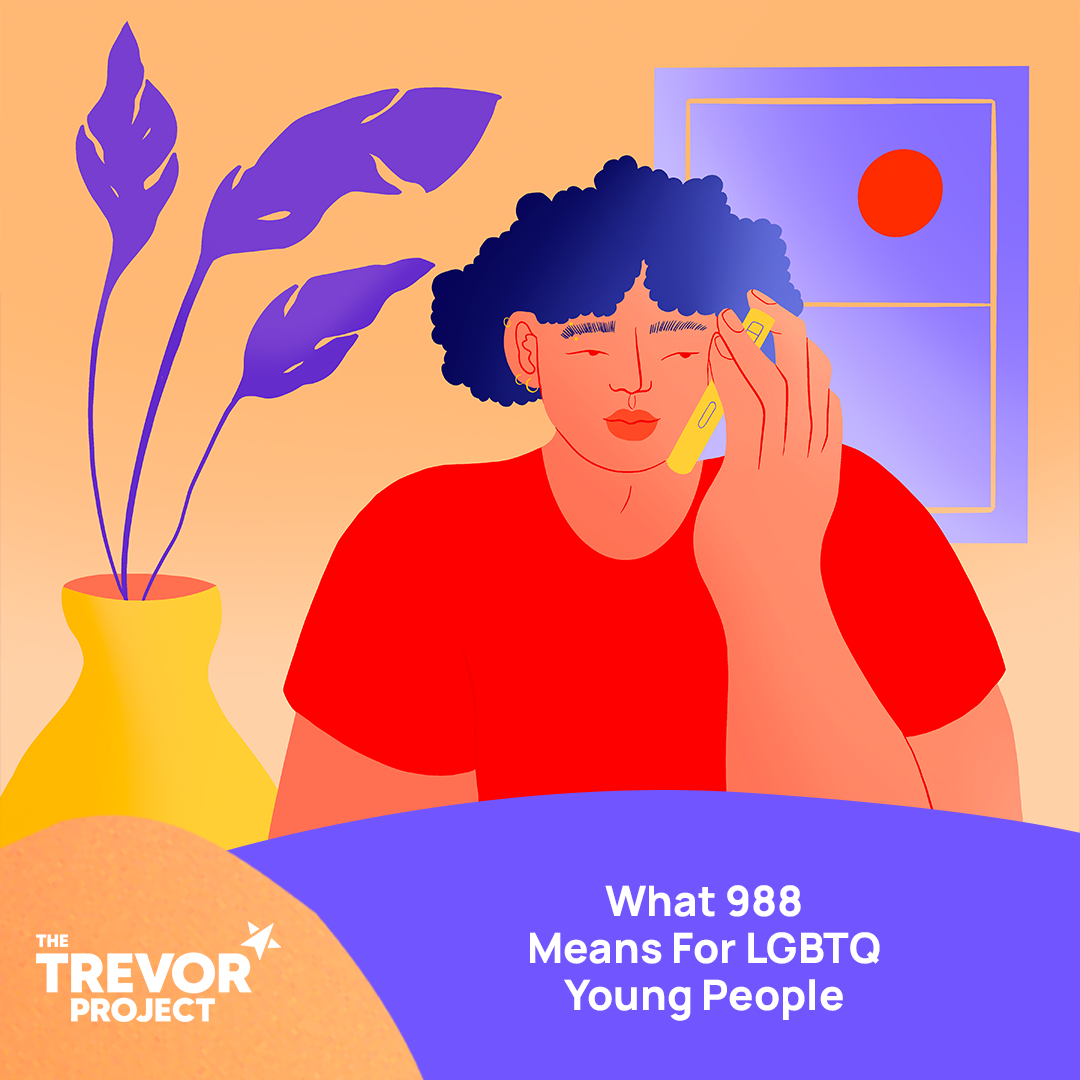
After years of planning, advocating and communicating, 988, the new three-digit code for the National Suicide Prevention Lifeline, went live today. As of today, people across the country can dial 9-8-8 if they are experiencing a mental or behavioral health emergency and connect to the help they need. The launch of the 988 lifeline is a watershed moment for transforming the U.S.’ crisis care system and provides the opportunity for safe, accessible, equitable care — supported by local mobile crisis teams. This will hopefully make accessing mental health crisis services easier for those in need, and The Trevor Project is thrilled to see this finally come to fruition after years of work from mental health advocates and organizations across the country.
When the National Suicide Hotline Designation Act was signed into law by former President Trump in October 2020, formally codifying 988, it was the first bill to pass unanimously through Congress that included the words “LGBTQ.” With leadership of and support by The Trevor Project, the law specifically referenced specialized services for LGBTQ youth, a group consistently found to be at higher risk for suicide compared to their peers. In FY22, we were also able to work with members of Congress to ensure $7.2 million was allocated for these sort of specialized services for LGBTQ youth, including culturally competent care and an Integrated Voice Response option to reach a trained lifeline counselor.
Having LGBTQ youth reach a trained counselor is critical as we know that LGBTQ young people are more than four times as likely to attempt suicide compared to their straight, cisgender peers. Our 2022 National Survey on LGBTQ Youth Mental Health also found that 45% of LGBTQ youth seriously considered attempting suicide in the past year, including more than half of transgender and nonbinary youth. Now that 988 is reality, we have an incredible opportunity to integrate these LGBTQ-inclusive crisis care services — a potentially massive step toward better addressing the public health crisis of LGBTQ youth suicide in this country.
When it comes to handling mental health crises, there is no one-size-fits-all solution. Our research found that more than 80% of LGBTQ youth said it was important that a crisis line include a focus on LGBTQ youth. Our research also shows that 60% of LGBTQ youth who wanted mental health care in the past year were not able to get it for a variety of reasons, including not believing they would be understood. As data show an upward trend for suicidal thoughts among LGBTQ youth, the need for these specialized services becomes even more acute.
This new three-digit number is an easy-to-remember way for people in the U.S. to connect with help and support during a mental health, substance use, or suicidal crisis. It is also an opportunity to transform the stigma and discrimination ordinarily tied to mental health care for marginalized and historically excluded communities like LGBTQ youth and Black, Indigenous, and other people of color. If implemented effectively, with strong infrastructure, a culturally competent workforce, and increased federal, state, and local funding, 988 can save lives. Yet more work is needed to see its success.
Congress, state legislatures, and government agencies can ensure 988 effectively meets the needs of LGBTQ young people across the country by passing the bipartisan 988 Implementation Act and developing federal legislation that specifically centers the needs of young people who are LGBTQ, people of color, and/or have a disability. In addition to legislation providing more funding and better systems of marginalized communities, we must ensure access to humane, culturally competent, trauma informed, and responsive services instead of being subjected to punitive measures and violence.
Today is a new day. A new day to celebrate inching one step closer to ensuring our mental health care system is one that represents the needs and unique experiences of people who need it the most. We should take the time to celebrate this momentous occasion. We also must not forget that 988 has ways to go before we can call this mission accomplished. The Trevor Project looks forward to working with Vibrant, SAMHSA, The White House, and our fellow mental health organizations to ensure LGBTQ youth can access the crisis care they need and deserve.
The Trevor Project is the world’s leading suicide prevention and mental health organization for lesbian, gay, bisexual, transgender, and queer and questioning (LGBTQ) young people. If you or someone you know is feeling hopeless or suicidal, our trained crisis counselors are available 24/7 at 1-866-488-7386 via chat www.TheTrevorProject.org/Get-Help, or by texting START to 678-678.