Youth's Lives Every Day
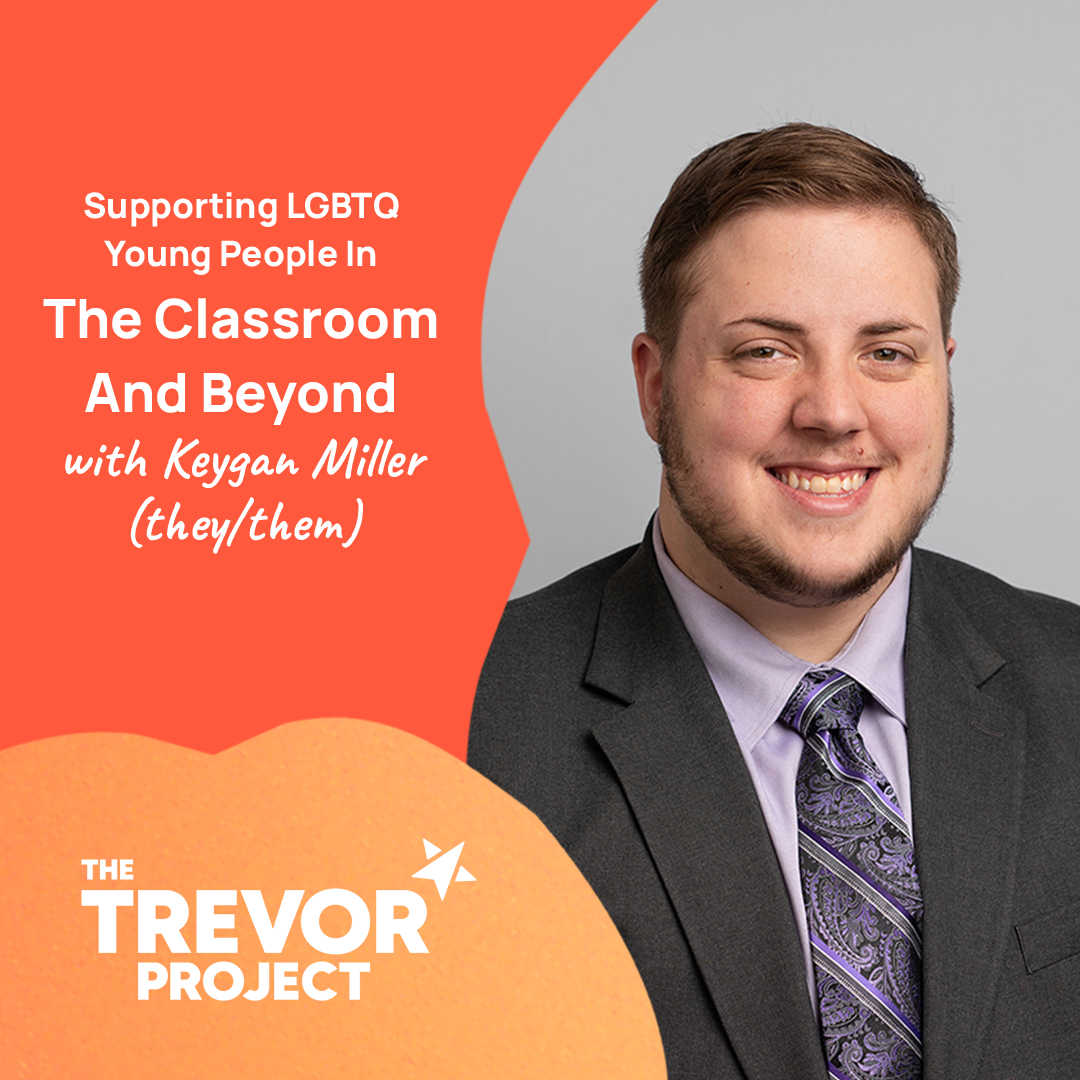
It’s almost time for students to go back to school, which can be stressful, confusing, and overwhelming for some. Especially in a political climate where LGBTQ identities are under attack by federal and state legislatures, LGBTQ young people could be going back to a hostile or unsafe environment this fall — the opposite of what a school should be. Keygan Miller (they/them), Public Training Manager at The Trevor Project, has a unique perspective as a former educator on what LGBTQ young folks need from their teachers.
After serving as a youth educator, I came to The Trevor Project with a desire to educate folks, mostly youth-serving adults, about LGBTQ issues and about suicide prevention and mental health. Our work on the Public Training Team is really geared toward ensuring that LGBTQ young people have more allies in their lives by engaging with educators, schools, and corporations on how best to support marginalized young people.
The back-to-school season is quickly approaching, and it has me thinking about the environments young people could be going back to. This current political moment, where LGBTQ people are being legislatively attacked, doesn’t just impact folks today. This will impact young people as they get older, and the next generation. For example, by telling teachers they can’t talk about LGBTQ identity in the classroom, politicians limit the ability for LGBTQ young people to see themselves in history, in society, and in healthy relationships. But also, by not talking about LGBTQ identity, misconceptions will persist, and limit the number of affirming allies.
This is why allies and organizations like The Trevor Project have to be even louder in affirming LGBTQ young people and providing safe environments for them to thrive — and a safe classroom environment is essential. This is important because in some places, teachers have to balance their own safety and security against being a loud and proud ally, not to mention LGBTQ teachers who have to do the same for being who they are.
So how do we provide a safe classroom? Start with using and teaching empathy — your students will follow your lead. Do not tolerate any bullying or harassment in your space. You can’t always control what happens outside of class, but your room can be a safe haven. Create a community that seeks to solve problems, not just temporarily, so when issues arise, use restorative justice methods that focus on mediation and agreement rather than punishment to resolve the issue.
Educate yourself on the nuances of LGBTQ identities and issues impacting LGBTQ folks. Make sure you understand the basics (The Trevor Project resource center is a great place to start), and then dive deeper. Read research about LGBTQ folks, read memoirs of LGBTQ people, and dig into LGBTQ history. And when you educate yourself, turn around and share that information with others, particularly your colleagues.
Use inclusive practices. For example, on the first day, have the students tell you their names rather than reading off the roster. If you want to, introduce yourself with your pronouns (he/him, she/her, they/them, etc) and invite your students to do the same. Avoid language like “boys and girls” or “ladies and gentlemen” and instead use “friends,” “class,” “scholars,” or other gender neutral terms to address the class.
If you make a mistake about someone’s names or pronouns, acknowledge it, apologize quickly, and then do better! Subtleties also go a long way — do you have a lovely piece of artwork that is in the trans flag colors? Do you have a small pronoun button that you can wear on your lanyard? These small acts, that go beyond the safe zone sticker, are big markers for LGBTQ students.
To LGBTQ young people, I want you to know that most people in the world want you to be you. Sometimes they don’t know the right words or terms. Sometimes they don’t know how to best support you. Sometimes you being you changes their lives in ways that they would have never imagined. All of this leads to mistakes, misunderstandings, and a fair amount of frustration. And when faced with all of that, it is easy to listen to the loud minority that are telling you that you don’t deserve to exist. You deserve to not only exist, but to be your full self. So block out the naysayers, guide those up-and-coming allies to places where they can learn to be more supportive, and seek out those who support you fully. And never forget you can reach out to The Trevor Project for support.
Sue Cardenas-Soto is a Copywriter at The Trevor Project, the world’s largest suicide prevention and mental health organization for lesbian, gay, bisexual, transgender, queer & questioning (LGBTQ) young people. If you or someone you know is feeling hopeless or suicidal, our trained crisis counselors are available 24/7 at 1-866-488-7386 via chat www.TheTrevorProject.org/Get-Help, or by texting START to 678-678.