You are using an outdated browser. Please upgrade your browser to improve your experience and security.

Skip to main
Blog

Trevor and RAINN Co-Create Guide on Supporting Survivors

BY: Trevor News
Yellow, orange gradient
Donate

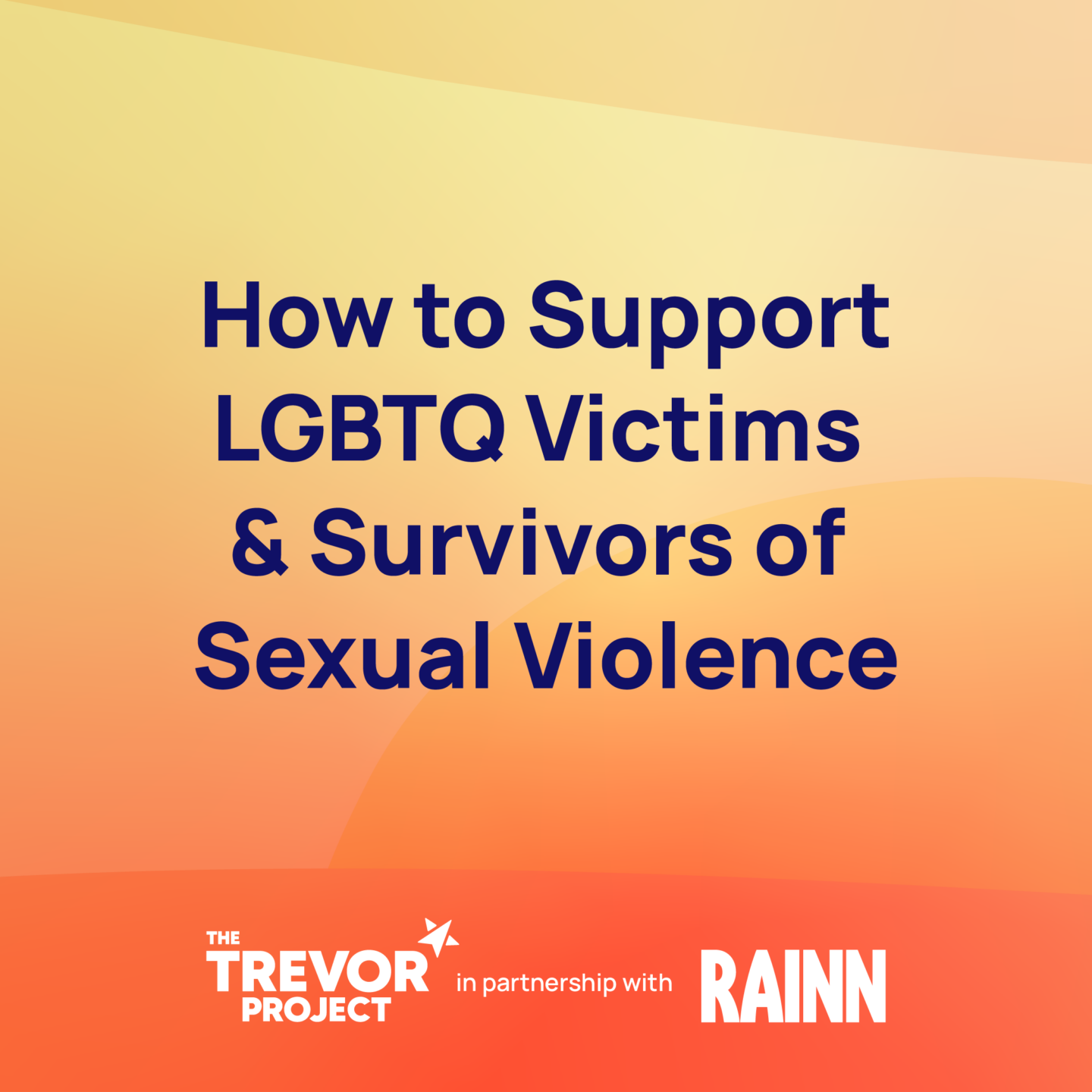
The Trevor Project is partnering with our friends at RAINN to shed important light on how we can best support those who have experienced sexual violence or trauma. Read our newest guide on how to be understanding to LGBTQ young people who are survivors and help them find the resources they need.

Read more from
Blog

Photo of The Trevor Project's Saurav Jung Thapa (he/him/his), Jaymes Black (he/she/they), Mark Henson (he/him/his) myself) with the Assistant Secretary for Health Admiral Rachel Levine, MD.
Blog

Celebrating Two Years of 988 LGBTQ Youth Specialized Services at The Trevor Project: Lessons Learned and the Path Ahead

By Saurav Jung Thapa, Senior Federal Affairs Manager, The Trevor Project This National Suicide Prevention Month, The Trevor Project is incredibly proud to commemorate two years of being the leading provider of LGBTQ Youth Specialized Services in the 988 Suicide & Crisis Lifeline.  The 988 Lifeline has provided crisis services through more than 200 crisis centers to over 10 million people since its launch in 2022. LGBTQ youth specialized services — a component of 988 alongside the Veterans Crisis Line and Spanish-language services — has served a significant portion of these contacts. In 2023 alone, Trevor served over 278,000 contacts…
3 people sitting shoulder to shoulder with arms around each other's shoulders
Blog

BIPOC Mental Health Awareness Month: Navigating Stigma

BIPOC communities have historically faced discrimination, systemic inequalities, and social injustices — all of which have profound impacts on mental health. This BIPOC Mental Health Awareness Month, it is essential to highlight the disparities that exist in access to mental health services among BIPOC communities. It’s important that we continue advocating for equitable resources and promoting the destigmatization of both asking for and receiving help. Stigma surrounding mental health is prevalent in many communities, often leading to shame, silence, and avoidance. Within BIPOC communities specifically, cultural factors and historical trauma can further complicate discussions around mental health. Breaking these stigmas…