Youth's Lives Every Day
By: Gabriella Potter (they/them), Crisis Services Digital Supervisor
In my work as a Crisis Services Digital Supervisor at The Trevor Project, I hear from young bi people everyday about the challenges and fears they face because of the stigma around bisexuality. That’s why we created, “How To Support Bisexual Youth: Ways to Care for Young People Who Are Attracted to More Than One Gender.” We know how important it is to provide resources for those who want to support the bi young people in their lives, as well as affirm and uplift bisexuality as a valid identity for bi young people themselves.
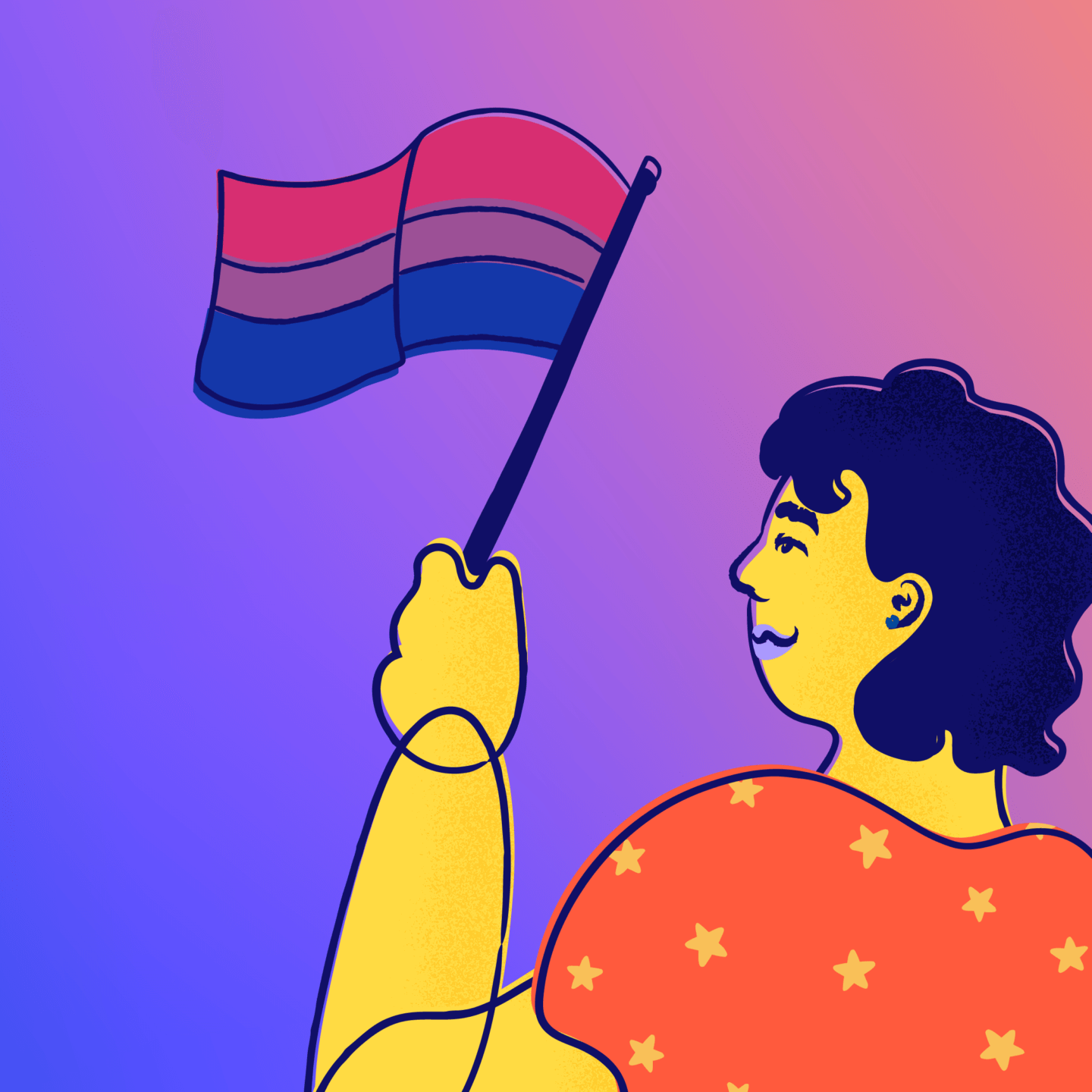
Bi Awareness Week is a celebration of what it means to experience attraction to people of more than one gender. It is also a reminder to us all about the amazing diversity of language that bi people use to describe their sexualities. In a world that often invalidates, erases, and harms people for multi-gender attraction, Bi Awareness Week highlights the need for resources that will help educate the larger population about what advocating for a safer, more inclusive world for bi people means.
As someone who identifies as bi and queer, I know that the bi community is incredibly vast. In fact, bisexual young people comprise 75% of those who identify as lesbian, gay, or bisexual in the CDC’s 2019 YRBSS study. Despite the numbers, we still see a distinct erasure of bisexuality. With this erasure being so prevalent, identifying as bisexual can be an act of reclamation and power.
Bi Awareness Week aligns with Celebrate Bisexuality Day, also known as Bi Visibility Day. Visibility is a complex topic for many; often those who are most visible in our world are subjected to higher rates of harm and have less access to safety, which is absolutely unacceptable. Visibility can also mean that young people get to see their identities reflected back to them. Being able to see bi people living their lives, finding joy, and making the world a more diverse and beautiful place can be so powerful for young people to see. It is empowering to see successful pathways and possibilities for ourselves, which can show young people that they are capable of accomplishing anything.
The Trevor Project also wants to contribute to increased visibility of the bi community, and celebrate the identities and experiences of our staff members who are attracted to people of more than one gender.